


Freelance digital marketer income realities looks shiny from the outside. Freedom to choose clients, set your own hours, work from a café or your bedroom — independence at its finest. No boss breathing down your neck, no rigid 9‑to‑5. And honestly, that flexibility is addictive. You can scale up when you’re hungry for more projects, scale down when burnout creeps in. How much freelance digital marketers earn? Is an evergreen question! Digital marketing freelancer earnings depends on several factors.
Freelancing as a digital marketer has become increasingly popular for professionals seeking more freedom and autonomy with their work, while companies increasingly look to freelance talent for content marketing, social media management and SEO expertise.
An impressive portfolio, certifications, and networking capabilities can significantly increase your freelance digital marketing salary.
I’ve seen freelancers brag about “six‑figure months” while others quietly admit they barely covered rent.
The truth sits somewhere in between.
That said, freelancing isn’t a gamble if you understand the realities. Earnings depend on skillset, niche, client base, and how well you manage the business side — not just the creative work. And it’s messy.
Negotiations, contracts, chasing payments. Imperfect, but doable.
In this guide, we’ll break down the income realities of freelance digital marketers. Not hype, not sugar‑coated promises. Just the practical truths: what influences earnings, the ranges you can expect, the challenges, and the opportunities to grow.
Freelance Digital Marketer Income Realities Explained
Digital marketing is in high demand, and freelance digital marketers can make a rewarding living if they possess strong portfolios and specialized skills. Freelancing also allows them to select projects, locations, and client bases of their choosing; though this career path requires plenty of self-discipline as it requires managing multiple projects at the same time; for those willing to put in the effort it can be very lucrative indeed!
Freelancers have the choice between working on project-based fees or retainers – fixed monthly payments made for ongoing services – depending on their projects’ pace of completion and client preferences.
Project-based fees can be more profitable if projects come in faster than expected, while retainers allow freelancers to build long-term relationships and earn repeat business. When setting rates based on skillset, client value provided, and current market rate it is vitally important that rates reflect your skill-set, value contribution to client, and the current market rate rate associated with those skillses.
Freelance digital marketers wear many hats. One day it’s SEO — tweaking keywords, fixing site speed, making sure Google actually notices your client’s website. Next, it’s ads. Running Facebook campaigns, testing Google PPC, adjusting budgets mid‑week because the clicks aren’t converting.
Then there’s content. Blogs, email newsletters, captions that somehow need to sound fresh every single time. And of course, social media — the endless cycle of posts, reels, comments, DMs. It’s messy, but that’s the gig.
Now, here’s the catch. Average digital marketer salaries in the US hover around $80,000 annually; this can vary greatly based on experience and location; typically those with more experience will receive higher compensation than newcomers.
One month you’re overloaded, the next you’re staring at an empty calendar. Retainers, on the other hand, bring stability. Clients pay monthly, you manage ongoing tasks, income feels steadier.
I’ve seen freelancers thrive on retainers while others chase projects for adrenaline. Neither is perfect — both shape your income reality.
Factors That Affect Freelancer’s Income
An hourly freelancer’s hourly rate plays an integral part in their overall earnings. Many new freelancers, especially beginners, undervalue themselves and offer their services too cheaply – leading them down a path toward financial difficulties.
Setting a minimum rate may help prevent this mistake.
Earning potential can be maximized for freelancers by increasing pricing over time and expanding their work portfolio. Years in business can also have an effect on pricing as can focusing on profitable niches, earning certifications and staying informed of technological advancements – all ways of increasing earning power for freelancers.
- Skillset & Specialization
SEO pros or paid ads specialists usually charge more than generalists. Content creators often get squeezed — unfair, but true. Experience & Portfolio Strength.
Clients pay for proof, not promises. A strong portfolio can bump rates fast. I’ve seen average skills win big just because the case studies looked polished.
- Client Location & Industry
A café in a small town won’t pay like a tech startup in New York. Geography twists the numbers. Industry too — e‑commerce budgets feel different from NGOs.
- Networking & Personal Branding
Here’s the catch: talent alone doesn’t decide income. Visibility does. Freelancers who look credible online — solid LinkedIn, active socials — often earn more than quieter experts.
Average Freelancer Income
Digital marketing is an evolving career field with increasing numbers of businesses looking to connect with customers online. Working from home or other locations can offer ample opportunities to become proficient at digital marketing; salaries depend on whether freelancers charge per project or hour – both offer excellent earning potential; those with more experience can often command higher rates, receiving tips from clients along the way.
New freelance digital marketers typically charge lower rates, prioritizing client acquisition. Experienced freelance digital marketer income,, on the other hand, may charge 2-5 times more due to their increased reliability, strategy development and technical abilities – these professionals may also build a solid reputation amongst clients by attending industry events and networking regularly – eventually leading to repeat business for both.
Digital marketing salaries may depend on several factors, including location, industry and the clients you work for. Large companies typically have larger budgets than smaller firms.
A digital marketing consultant’s rate may also increase through specialization in areas like SEO, content marketing or social media management; those possessing leadership or strategy capabilities may command an even higher salary.
Entry-level digital marketing managers in Germany and Spain can expect to earn between EUR35,633 and EUR59,686 annually, which exceeds the 2025 minimum wage by more than 30 percent. In India freelancers might pull ₹20,000–₹40,000 a month if they’re hustling with local clients.
Experienced ones? ₹80,000–₹1.5 lakh isn’t unusual, especially with steady retainers. International clients shift the game — a single project can pay what three local gigs do.
I’ve seen someone earn $1,000 from one campaign while another scraped by with ₹10,000 for weeks of work.
Digital marketing professionals can further their careers by taking additional training or certification courses; also they may gain experience working for marketing agencies before transitioning into freelance roles; these investments in their careers could increase monthly income significantly as well as become invaluable assets to clients.
Freelance digital marketer income swings — sometimes wildly.
Mistakes That Limit Freelancer’s Income
Digital marketing can be challenging, and even experienced freelancers can make errors that thwart their careers. From chasing vanity metrics to failing to analyse results and track them correctly, these common missteps can undermine campaigns and prevent businesses from reaching measurable business outcomes.
But mistakes don’t need to define your business – working with an experienced freelance digital marketer can correct avoidable errors for increased visibility, engagement and greater profitability.
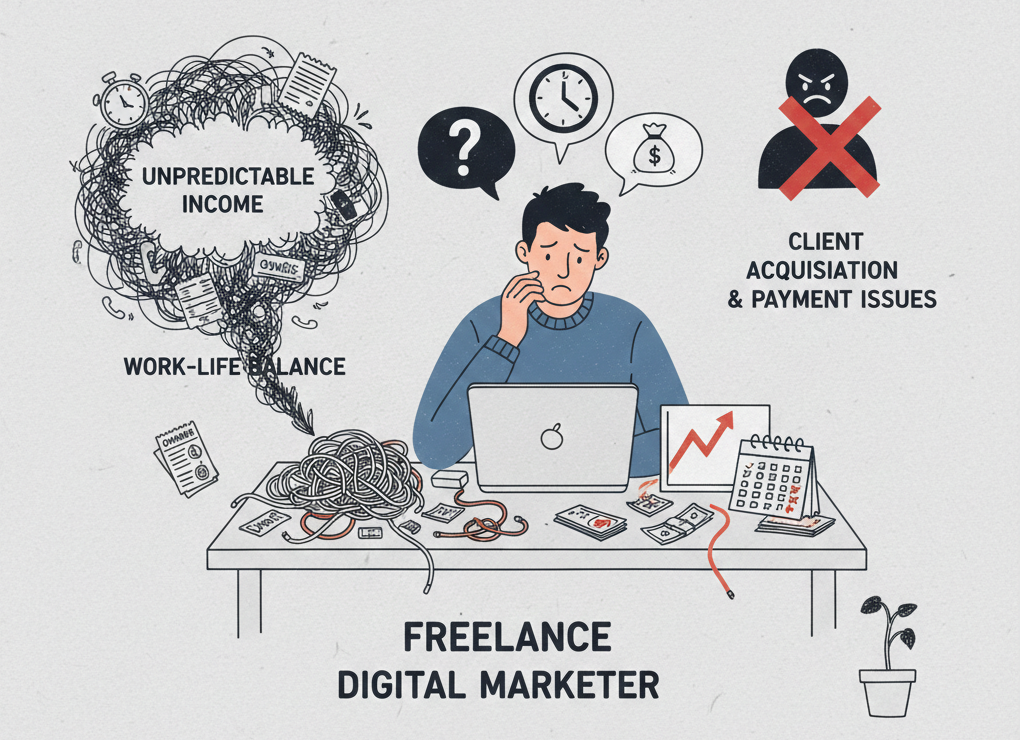
Freelancing isn’t all freedom and coffee shop vibes.
Income swings — one month feels rich, the next you’re chasing overdue invoices. Payment delays? Too common. I’ve seen freelancers wait weeks, even months, for a client to “process” a bill.
One of the key errors freelance digital marketers make is under-pricing their services. While this might initially attract more clients by offering competitively low rates, this strategy often backfires in the long run by devaluing your expertise and encouraging customers to expect premium services at discounted prices.
Instead, focus on becoming an authority in your niche area by setting higher rates – this strategy should lead to success!
Competition adds pressure. Everyone’s undercutting rates, promising miracles, making it harder to stand firm. And then there’s the skill race.
Digital marketing shifts fast — algorithms change, platforms evolve, trends vanish overnight. That said, here’s the catch: if you stop learning, you fall behind. Survival isn’t just about talent, it’s about staying sharp while juggling chaos.
Is Freelance Digital Marketing a High-Income Career?
Growth in freelance digital marketer income isn’t just about stacking more projects. It’s about scaling smart. Long‑term clients are gold — steady retainers, predictable income, less chasing.
I’ve seen freelancers breathe easier once they lock in two or three solid monthly contracts. Then comes diversification. Consulting, training, even selling digital products like templates or mini‑courses. Suddenly, income isn’t tied only to hours worked.
That said, here’s the catch: diversifying takes time, and not every experiment pays off. Some flop. Some fly. And then there’s the big leap — building an agency or small team.
Risky, yes. But it transforms freelancing into something bigger, more sustainable. Imperfect, messy, but real growth often looks exactly like that.

But let’s be honest, the income isn’t a straight line. Some months you’re flush with projects, invoices cleared, clients happy. Other months? Quiet inbox, delayed payments, the uneasy feeling of “what’s next.” Rewarding, yes. Uneven, absolutely. That’s the reality.
So what do you do with that? Focus on what you can control. Skill development matters — the sharper your expertise, the stronger your rates.
Networking isn’t optional either. I’ve seen freelancers with average skills land better gigs simply because they built relationships, showed up online, and looked credible. And expectations? Keep them realistic.
You won’t hit six figures overnight, but you can build steady growth if you treat freelancing like a business, not a side hustle.
That said, here’s the catch: growth doesn’t happen by accident. You need to audit your skills, figure out where you’re strong, where you’re weak.
Set income goals that actually make sense for your lifestyle. Then plan for growth — whether that’s long‑term clients, diversifying services, or slowly scaling into an agency.
Imperfect, messy, sometimes frustrating. But forward. And forward is what keeps freelancers alive in this game.

[…] let’s pull it together — digital marketing gives local businesses five real […]
[…] read my latest post on Freelance Digital Marketer Income Realities to get the insights of digital marketing […]